
Can Gut Health Influence Depression? The Role of Probiotics in Mental Health
Research on the gut-brain connection suggests that probiotics may play a supportive role in mood, stress regulation, and emotional resilience. They are not a stand-alone treatment for depression, but they may be one piece of a broader mental health strategy.
Can Probiotics Help Depression?
Can probiotics help depression?
Probiotics may support mood and stress regulation through the gut-brain axis.
Do they cure depression?
No. They are not a replacement for therapy or medical care.
When are they most helpful?
As part of a broader approach including therapy, sleep, nutrition, and stress management.
But here’s what most people don’t realize: the way your gut influences your mood is more complex than simply taking a supplement, and in some cases, it may explain why nothing you’ve tried has worked long-term.
What Is the Gut-Brain Axis?
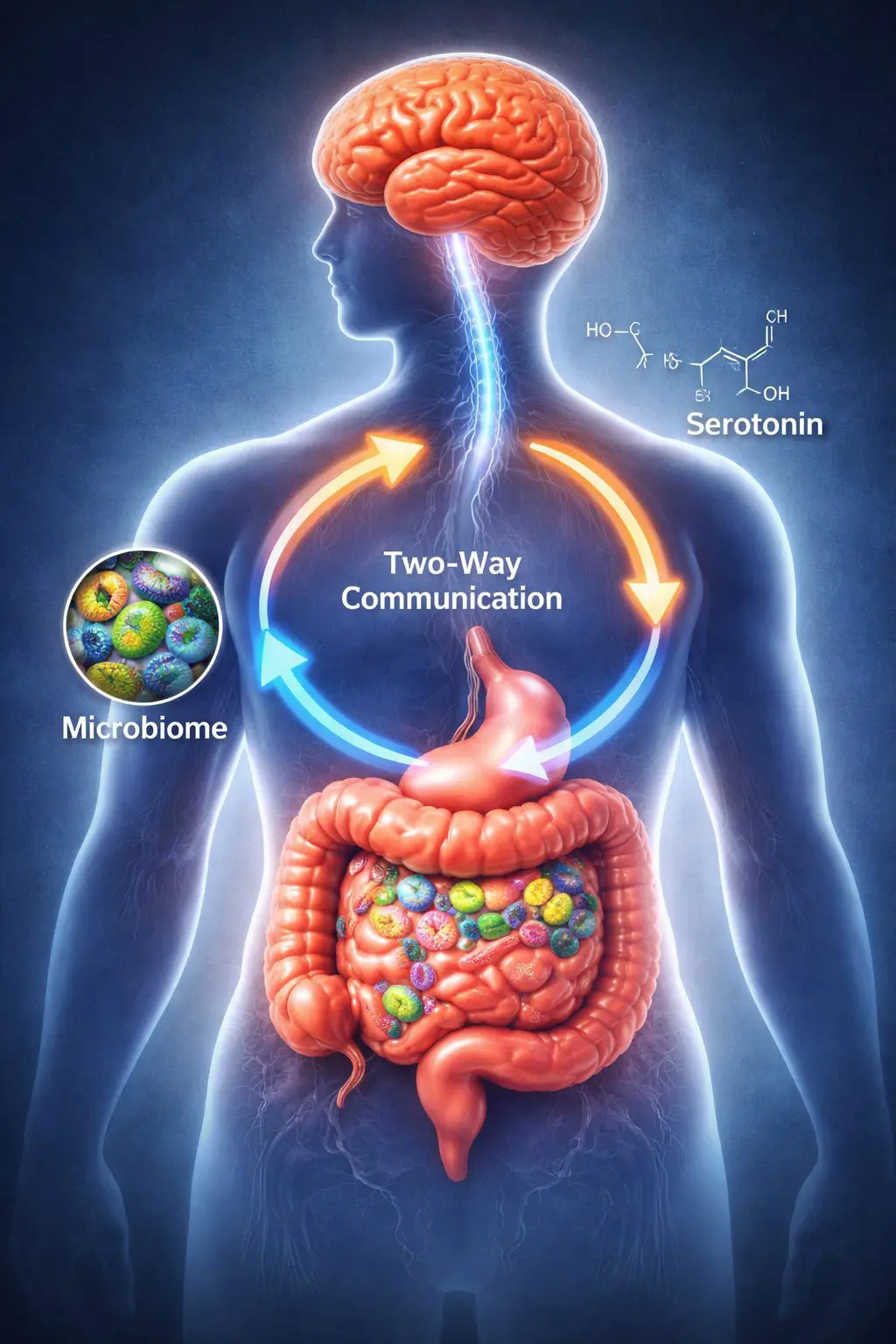
The gut-brain axis is a bidirectional communication system linking the digestive system and the brain. It involves neural pathways such as the vagus nerve, immune signaling, hormones, and microbial metabolites. Through this network, gut health can influence mood, stress regulation, and emotional resilience, making it a key factor in understanding how probiotics may support mental health.
Over the past decade, scientists have begun paying closer attention to a surprising question: Can the health of your gut influence your mental health?
For many people struggling with depression, this idea may sound unusual at first. Depression is often discussed in terms of brain chemistry, traumatic experiences, stress, and emotional challenges. Rarely do we hear conversations about the digestive system when talking about mental health. When someone is feeling emotionally exhausted, unmotivated, or overwhelmed, the natural assumption is that the problem must exist entirely in the brain.
Yet the human body does not operate in isolated systems. The brain, digestive system, immune system, and nervous system are deeply interconnected. Over the past several years, researchers have discovered that the trillions of microorganisms living inside our digestive tract may influence how we think, feel, and respond to stress. These microorganisms collectively form what scientists refer to as the gut microbiome.
The microbiome is not simply a passive population of bacteria living in the body. These microorganisms participate in a wide range of biological processes, including digestion, immune regulation, inflammation control, and metabolic activity. In recent years, scientists have also begun exploring how these microbes communicate with the brain.
This communication network between the digestive system and the brain is known as the gut-brain axis. It involves a complex set of pathways that allow signals to travel between the gut and the central nervous system. These pathways include the vagus nerve, immune signaling molecules, hormones, and metabolic byproducts produced by gut bacteria.
Through these mechanisms, the microbiome may influence processes involved in mood regulation, stress response, and emotional resilience. Researchers are particularly interested in how gut bacteria interact with neurotransmitters such as serotonin, dopamine, and gamma-aminobutyric acid (GABA), all of which play roles in emotional regulation.
Because of these discoveries, scientists have begun exploring whether certain beneficial bacteria, commonly referred to as probiotics, may help support emotional wellbeing. Some researchers even use the term psychobiotics to describe probiotic strains that appear to influence brain function indirectly through the gut.
However, before we jump to conclusions or assume that probiotics are a solution for depression, it is important to approach this topic with careful curiosity. The relationship between gut health and mental health is complex, and while the research is promising, it is still evolving.
So the question remains:
Can taking probiotics for depression help?
Key Truth
Probiotics may support mood and stress regulation by influencing the gut-brain axis, inflammation, and neurotransmitter activity. However, they are not a cure for depression and are most effective as part of a broader mental health approach.
Depression is influenced by many biological, psychological, and social factors. If you want to explore a deeper understanding of how these patterns show up in men specifically, you can read more about men’s mental health therapy here. What the emerging science suggests is that gut health may be one piece of a much larger puzzle when it comes to understanding mental health and emotional well-being.
Understanding the Gut-Brain Axis
The gut-brain axis is a communication system between the digestive system and the brain. It involves the vagus nerve, immune signaling, hormones, and biochemical pathways that allow the gut and brain to influence each other.
The human digestive system is home to an enormous ecosystem of bacteria, fungi, and other microorganisms, collectively known as the gut microbiome. Far from being passive passengers, these microorganisms play an active and essential role in maintaining many of the body’s fundamental biological processes. Scientists now recognize that the microbiome functions almost like a hidden organ within the body, influencing digestion, immune activity, metabolism, and even aspects of neurological function.
One of the most important roles of gut bacteria is assisting with digestion and nutrient metabolism. These microbes help break down complex carbohydrates and fibers that the body cannot digest on its own. In doing so, they produce important compounds such as short-chain fatty acids, which support gut lining integrity and help regulate inflammation. Gut bacteria also contribute to the synthesis of certain vitamins, including some B vitamins and vitamin K, both of which are important for overall health.

In addition to these digestive functions, the microbiome plays a major role in regulating the immune system. A large portion of the body’s immune activity takes place in the digestive tract, where immune cells constantly interact with gut microbes. Healthy microbial diversity helps the immune system maintain balance, while disruptions in the microbiome may contribute to increased inflammatory responses. Because chronic inflammation has been associated with certain mental health conditions, including depression, researchers have become increasingly interested in how gut health may influence emotional well-being through immune signaling.
Perhaps the most intriguing discovery in recent years is that the microbiome also communicates directly with the brain. This communication occurs through a network known as the gut-brain axis, which allows the digestive system and the central nervous system to exchange information continuously.
One of the key components of this communication system is the vagus nerve, a major nerve that connects the digestive tract directly to the brainstem. The vagus nerve acts like a communication highway, carrying signals between the gut and the brain in both directions. Changes in gut bacteria can influence signals traveling along this pathway, potentially affecting stress responses, emotional regulation, and even cognitive function.
Another important pathway involves chemical signaling through the bloodstream. Gut bacteria produce a variety of metabolic byproducts that circulate throughout the body. Some of these compounds influence brain function indirectly by interacting with immune cells, hormones, and neural pathways associated with mood and stress.
Gut bacteria also influence the production and regulation of several neurotransmitters that are associated with emotional regulation. Approximately 90 to 95% of the body’s serotonin is synthesized in the gastrointestinal tract by enterochromaffin cells, with gut microbiota playing a direct regulatory role in this process (Yano et al., 2015, Cell). Although serotonin produced in the gut does not directly enter the brain, it still plays an important role in regulating digestion, immune activity, and signaling pathways connected to emotional health.
When the microbiome becomes imbalanced, a condition often referred to as dysbiosis, researchers believe it may contribute to physiological changes associated with inflammation, stress dysregulation, and metabolic imbalance. These changes may influence the biological environment in which mental health processes occur.
It is important to emphasize that gut bacteria alone do not cause depression. Mental health is shaped by a complex interaction of biological, psychological, and social factors. Trauma, chronic stress, relationship difficulties, sleep disruption, lifestyle habits, and genetic predispositions all play important roles.
However, growing evidence suggests that the microbiome may represent one biological factor within this larger picture, influencing how the body regulates stress, inflammation, and emotional stability. As research into the gut-brain axis continues to expand, scientists are gaining a deeper understanding of how digestive health and mental health may be more closely connected than previously thought.
What Are Psychobiotics?
Psychobiotics are specific strains of probiotics that may influence mood and stress response through their effects on the gut-brain axis.
In simple terms: your gut and brain are constantly communicating, and that conversation can influence how you feel.
Psychobiotics are a category of probiotic microorganisms that researchers believe may influence the brain through their effects on the gut-brain axis. While traditional probiotics are typically marketed for digestive health, psychobiotics are being studied for their potential ability to influence mood, stress response, and certain aspects of cognitive functioning.
The concept of psychobiotics has emerged from growing evidence that the microorganisms living in the gut can interact with systems in the body that regulate emotional and neurological processes. Rather than acting directly on the brain in the way some medications do, these microbes appear to influence biological pathways that affect how the brain responds to stress and emotional stimuli.
Scientists believe psychobiotics may influence mental health through several mechanisms. One important mechanism involves inflammation regulation. Certain gut bacteria help regulate immune signaling and inflammatory responses in the body. Because chronic lowgrade inflammation has been associated with depressive symptoms in some individuals, this connection has become an important focus of research.
Another mechanism involves the regulation of stress hormones. The gut microbiome interacts with the hypothalamic-pituitary-adrenal (HPA) axis, the system responsible for controlling the release of cortisol during stress. Changes in gut bacteria may influence how this system responds to prolonged stress.
Some probiotic strains may also affect the production or signaling of neurotransmitters such as gamma-aminobutyric acid (GABA), which plays an important role in calming the nervous system and supporting emotional balance.
Although research in this area is still evolving, several probiotic strains have appeared repeatedly in studies examining mood and stress regulation. Many of these strains belong to the Lactobacillus and Bifidobacterium families, which are among the most commonly studied beneficial bacteria in the human microbiome.
What Research Studies Have Found
Over the past fifteen years, researchers have conducted a growing number of studies exploring whether probiotics may influence mental health. This emerging field of research has focused on how certain strains of beneficial bacteria interact with biological systems involved in stress regulation, inflammation, and neurotransmitter activity.
A 2019 systematic review and meta-analysis published in the journal Nutrients, analyzing 34 controlled trials, found that probiotic supplementation was associated with significant reductions in depression and anxiety scores compared to placebo, with the most robust effects seen in studies using multi-strain formulas over a minimum of 8 weeks. For further reading, see PubMed: Gut Microbiome and Mood Regulation.
Some studies suggest that specific probiotic strains may help reduce perceived stress levels in certain populations. In these trials, participants taking targeted probiotic combinations reported feeling less overwhelmed by everyday stressors compared to those receiving a placebo. Other studies have observed modest improvements in symptoms associated with mild anxiety or low mood.
In several clinical trials, individuals who took particular probiotic combinations reported improvements in sleep quality, emotional resilience, and stress tolerance. Researchers believe these effects may be linked to changes in inflammatory signaling, alterations in gut microbiome composition, and interactions with the body’s stress response systems.
One combination of probiotic strains that has received significant attention in research has been associated with reductions in psychological distress and improved coping during stressful situations. While these findings are promising, the improvements observed in most studies tend to be moderate rather than dramatic.
Other research involving different probiotic strains has suggested potential effects on neurotransmitter pathways, including systems involved in serotonin and GABA signaling. These findings have encouraged scientists to continue exploring how the microbiome may influence emotional regulation.
Despite these encouraging results, it is important to interpret the research cautiously. Most studies show supportive effects rather than curative outcomes. Probiotics do not function like pharmaceutical antidepressants and should not be viewed as a replacement for professional mental health care. Instead, many researchers now see the microbiome as one contributing factor within the broader landscape of mental health and well-being.
Why Gut Health Influences Depression (And Where Probiotics Fit In)
Researchers have identified several biological pathways that may help explain why gut health can influence mood and emotional regulation. While depression is a complex condition with many contributing factors, the gut microbiome may affect several systems in the body that are involved in mental health.
How Probiotics May Influence Depression (Biological Mechanisms)
To better understand how probiotics may support mood, it helps to look at the key biological pathways involved in the gut-brain connection. These mechanisms explain how changes in the microbiome can influence stress, inflammation, and emotional regulation.
- Inflammation and immune signaling
- Stress hormone regulation (HPA axis)
- Nutrient absorption and brain function
- Neurotransmitter activity
Inflammation
One area receiving significant attention is the role of chronic inflammation. Some individuals experiencing depression show elevated markers of inflammation in the body. Because gut bacteria interact closely with the immune system, imbalances in the microbiome may contribute to inflammatory signaling. When the gut barrier becomes compromised or microbial diversity decreases, immune responses may become dysregulated, potentially influencing mood and overall well-being.
Stress Hormone Regulation
Chronic stress can also affect the microbiome. Prolonged stress activates the body’s stress response system, increasing the release of cortisol. Elevated cortisol levels may disrupt sleep patterns, reduce energy levels, and affect emotional resilience. At the same time, stress can alter the balance of gut bacteria, creating a feedback loop in which stress affects the microbiome and the microbiome influences how the body responds to stress.
Nutrient Absorption
The digestive system plays a critical role in absorbing nutrients needed for healthy brain function. Nutrients such as B vitamins, magnesium, zinc, and amino acids are essential for the production of neurotransmitters involved in mood regulation. When digestion or gut health is impaired, the body may have more difficulty absorbing these nutrients.
Neurotransmitter Signaling
Gut bacteria also appear to influence signaling pathways associated with neurotransmitters such as serotonin, dopamine, and GABA. These chemical messengers play key roles in regulating mood, motivation, and emotional balance. Taken together, these mechanisms suggest that gut health may influence the biological environment in which mental health processes occur.
| Pathway | What It May Influence | Why It Matters for Mood |
|---|---|---|
| Inflammation | Immune signaling and inflammatory responses | Chronic inflammation has been associated with depressive symptoms in some individuals |
| Stress hormones | HPA axis activity and cortisol regulation | Stress dysregulation can affect sleep, resilience, and emotional stability |
| Nutrient absorption | Uptake of B vitamins, magnesium, zinc, and amino acids | These nutrients are needed for healthy brain and neurotransmitter function |
| Neurotransmitter signaling | Serotonin, dopamine, and GABA-related pathways | These systems help regulate mood, motivation, calm, and emotional balance |
Signs Your Gut Might Be Affecting Your Mental Health
Many individuals experiencing depression, anxiety, or chronic stress may not realize that digestive health could be playing a supporting role in how they feel emotionally. Because the gut and brain are connected through the gut-brain axis, changes in the microbiome can influence stress responses, inflammation, sleep quality, and even mental clarity. When the gut is not functioning optimally, the effects may show up not only as digestive symptoms but also as emotional or cognitive challenges.
For some individuals, these patterns are also connected to unresolved stress or trauma stored in the body. When the nervous system remains in a heightened or shutdown state for extended periods, it can influence both emotional regulation and physical health. You can learn more about how this is addressed through trauma and PTSD therapy, which focuses on how the nervous system responds to ongoing stress.
It is important to recognize that these signs do not prove that gut health is the primary cause of depression or anxiety. Mental health is shaped by many factors, including life stress, trauma, sleep, relationships, and lifestyle habits. However, if several of the symptoms below sound familiar, it may be worth considering whether your gut health could be influencing your mood or overall mental well-being.
Common Signs to Pay Attention To
Digestive discomfort
Frequent bloating, gas, constipation, or diarrhea may suggest the gut is under strain.
Brain fog
Persistent mental fuzziness or trouble concentrating may reflect broader gutbrain disruption.
Stress sensitivity
Feeling unusually reactive to everyday stress can sometimes reflect gut-related stress dysregulation.
Sugar cravings
Strong cravings for processed foods may point to imbalances affecting both the body and mood.
Persistent fatigue
Low energy despite adequate sleep may signal that deeper physiological issues need attention.
Mood swings
Shifts in mood across the day may reflect stress, blood sugar issues, inflammation, or gut imbalance.
Sleep disturbances
Trouble sleeping without a clear external cause may be part of a larger gutbrain pattern.
Low motivation
Mental sluggishness and lack of drive may be influenced by both emotional and physiological factors.
If you recognize several of these symptoms in your own experience, it does not necessarily mean gut health is the root cause. However, it may suggest that the gut-brain connection deserves closer attention as part of a broader approach to improving both physical and emotional health.
Why Probiotics Alone Are Not Enough
One of the most common misconceptions about probiotics is the belief that they act as a quick or standalone solution for depression. In reality, a person’s mental health rarely improves through a single intervention. Depression often develops through a complex interaction of biological, psychological, and lifestyle factors, including trauma history, chronic stress, sleep quality, nutrition, physical activity, and the strength of one’s social connections.
If someone is consistently experiencing severe sleep deprivation, poor dietary habits, high stress levels, and limited physical movement, simply adding a probiotic supplement is unlikely to produce meaningful change on its own. While improving gut health may support certain biological processes linked to mood, it cannot replace the broader foundations that support emotional well-being.
Instead, probiotics appear to be most helpful when they are part of a comprehensive approach to health. This may include counseling or therapy, better sleep habits, stress management strategies, balanced nutrition, and maintaining supportive relationships. Addressing these areas together tends to create a stronger foundation for long-term mental health.
Important Reminder
Probiotics may be supportive, but lasting improvement in mental health usually comes from addressing the full picture: stress, sleep, trauma, nutrition, relationships, movement, and emotional support.
Who Should Be Careful With Probiotics
Although probiotics are generally considered safe for many people, certain individuals should seek professional guidance before using them.
- People with compromised immune systems should consult a healthcare professional before taking probiotic supplements.
- Individuals taking immunosuppressant medications may also require medical guidance.
- Those experiencing severe digestive disorders or suspected bacterial overgrowth may need professional evaluation before introducing probiotics.
- Because the microbiome is complex and highly individualized, what works well for one person may not be appropriate for another.
The Future of Gut-Brain Research
Research into the gut microbiome is expanding rapidly. Scientists continue to investigate how gut bacteria influence mood, cognition, inflammation, and stress resilience.
In the future, healthcare professionals may be able to analyze an individual’s microbiome and develop personalized strategies to support both digestive and mental health.
For now, however, the research suggests that the microbiome represents one piece of a much larger picture of mental well-being.
So, can probiotics help depression?
Yes, sometimes supportively. No, not as a
cure.
So, Can Probiotics Help Depression?
Probiotics may support mood regulation and stress resilience for some individuals, but they are not a cure for depression. They work by influencing the gut-brain axis, inflammation, and stress response systems in the body.
The relationship between gut health and mental health is complex, and while emerging research is promising, probiotics should not be viewed as a standalone treatment for emotional or psychological conditions.
Instead, probiotics appear to function as one supportive element within a broader approach to improving mental health. Depression and anxiety often develop through a combination of biological, psychological, and lifestyle factors. Because of this, meaningful improvement usually requires addressing multiple areas of health rather than relying on a single solution.
That broader approach often includes counseling or therapy, lifestyle adjustments, stress management strategies, improved sleep habits, and balanced nutrition. In some cases, addressing gut health may help remove biological barriers that make emotional recovery more difficult. Supporting the microbiome may influence inflammation, nutrient absorption, and stress regulation, all of which can play a role in how the body and brain respond to ongoing challenges.
For some individuals, improving gut health may contribute to noticeable improvements in mood and resilience. For others, the impact may be modest. Either way, the growing body of research surrounding the gut-brain axis reminds us that mental health is closely connected to overall physical health and that caring for the body can play an important role in supporting emotional well-being.
Key Takeaways
Gut and brain are connected
The gut-brain axis plays a real role in stress signaling, inflammation, and mood-related processes.
Probiotics are supportive, not curative
They may help some people, but they do not treat or cure depression on their own.
Gut health affects more than digestion
Inflammation, nutrient absorption, and neurotransmitter activity may all be influenced by gut function.
Whole-person care matters
Long-term improvement usually requires attention to both physical and emotional health.

Chronic stress and survival mode can affect both the nervous system and gut health, influencing mood, emotional regulation, and resilience.
When It Might Be Time to Seek Support
If you are struggling with persistent depression, anxiety, or emotional exhaustion, it is important to remember that you do not have to face it alone.
Mental health challenges rarely arise from a single cause. They often develop through a complex interaction of life experiences, stress, relationships, sleep patterns, physical health, and biological factors. Because of this, meaningful change often requires looking at the whole picture rather than focusing on one isolated area.
If you are looking for support, you can explore:
- Men’s Mental Health Therapy for support with stress, burnout, and emotional disconnection
- Trauma & PTSD Therapy to work through deeper emotional patterns and unresolved experiences
- Integrative Wellness Services that include nutrition and lifestyle support alongside mental health care
For additional reading on the gut-brain connection and mood, see Harvard Health: Gut Feelings — The Microbiome and Mental Health.
My approach recognizes that mental health is influenced not only by our thoughts and experiences, but also by how our bodies respond to stress, sleep, nutrition, and overall lifestyle.
Most approaches focus on either the mind or the body. This work integrates both, because lasting change happens when we address the full system, not just one part of it.
FAQ: Probiotics and Mental Health
Frequently Asked Questions: Probiotics and Mental Health
Can probiotics cure depression?
No. Probiotics may support mood and stress regulation through their effects on the gut-brain axis, inflammation, and neurotransmitter signaling, but they are not a cure for depression. A 2019 meta-analysis in the journal Nutrients found that probiotic supplementation was associated with significant reductions in depression and anxiety scores, but the improvements were supportive rather than curative. Depression requires a comprehensive approach including therapy, lifestyle changes, and medical support when needed.
How long does it take for probiotics to affect mood?
Most studies examining probiotics and mood use supplementation periods of eight weeks or longer before measuring outcomes. Some individuals report changes in stress tolerance and mood within four to six weeks, while others notice little change. Results vary significantly depending on the strains used, dosage, baseline gut health, diet, stress levels, and other individual factors.
Which probiotics are best for mental health?
Strains from the Lactobacillus and Bifidobacterium families have been studied most extensively for their potential effects on mood and stress regulation. Multi-strain formulas used consistently over a minimum of eight weeks have shown the most robust effects in research. However, effectiveness depends on the individual, their baseline microbiome composition, and the broader context of their lifestyle and mental health.
Should I take probiotics for depression?
Probiotics may be helpful as part of a broader approach that includes therapy, lifestyle changes, sleep improvement, stress management, and medical support when needed. They are not a replacement for professional mental health care. If you are experiencing depression, speaking with a qualified health professional before starting supplementation is the recommended first step.
What is the gut-brain axis and how does it affect mood?
The gut-brain axis is a bidirectional communication system linking the digestive system and the brain through the vagus nerve, immune signaling, hormones, and microbial metabolites. Through this network, gut bacteria can influence inflammation, stress hormone regulation, and neurotransmitter activity including serotonin, approximately 90 to 95% of which is synthesized in the gastrointestinal tract. When the microbiome is disrupted, these systems become less efficient, which may indirectly affect mood, resilience, and stress response.
What are psychobiotics?
Psychobiotics are specific strains of probiotics that researchers believe may influence mood, stress response, and cognitive function through their effects on the gut-brain axis. Unlike traditional probiotics marketed for digestive health, psychobiotics are studied for their potential to influence biological pathways connected to emotional regulation, including inflammation control, HPA axis stress response, and GABA neurotransmitter signaling.
Can gut health affect anxiety as well as depression?
Yes. The same gut-brain mechanisms that may influence depression also affect anxiety. The microbiome interacts with the HPA axis and stress hormone regulation, and disruptions in gut health may contribute to increased stress reactivity and reduced resilience. Research has found that probiotic supplementation is associated with reductions in both depression and anxiety scores in some individuals, though effects are supportive rather than curative.
How does chronic stress affect gut health?
Chronic stress activates the body’s stress response system, increasing cortisol levels, which can disrupt sleep, reduce energy, and alter the balance of gut bacteria. This creates a feedback loop where stress affects the microbiome and the microbiome influences how the body responds to further stress. Men living in prolonged survival mode or experiencing burnout may find that gut health deteriorates alongside their mental and emotional state.
Is improving gut health enough to treat depression on its own?
No. Depression rarely improves through a single intervention. Meaningful and lasting change usually requires addressing sleep, stress, trauma history, nutrition, physical activity, social connection, and emotional support together. Probiotics are one tool in a broader toolkit, not a standalone solution.
Where can men in Newfoundland or Ontario get integrative mental health support?
Men in Newfoundland and Labrador and Ontario can access virtual therapy and integrative wellness support through Evolution Counselling and Wellness with Lance J. Jackson, RSW, CNP. Lance’s approach integrates psychotherapy, nervous system regulation, and nutrition-informed care to address both the psychological and physiological factors affecting men’s mental health. A free 15-minute Clarity Call is available at evolutioncounsellingandwellness.ca.
About the Author
Lance J. Jackson, MSW, RSW, CNP is a Registered Social Worker and founder of Evolution Counselling & Wellness. He specializes in men’s mental health, trauma, emotional regulation, relationships, and integrative approaches that consider both psychological and physiological factors influencing well-being.
Lance provides virtual counselling and integrative wellness services to clients across Newfoundland and Labrador and Ontario.
When You’re Ready To Take The Next Step
If this article speaks to something you have been carrying, support may help you better understand what is going on beneath the surface and begin taking practical steps toward change.
Learn about nutrition-informed mental health support Book a Free Consultation