
What Survival Mode Looks Like in Men: A Nervous System State, Not a Mindset
What survival mode looks like in men, what it costs, and how healing begins when the body finally learns safety.
Quick Answer: What Is Survival Mode?
Survival mode is a nervous system state where the body stays braced for danger through fight, flight, or shutdown, even when there is no immediate threat. In men, survival mode often shows up as tension, irritability, emotional numbness, overworking, hyper-vigilance, and difficulty relaxing or feeling safe.
About the Author
Lance J. Jackson, MSW, RSW, CNP is a Registered Social Worker and founder of Evolution Counselling & Wellness, specializing in men’s mental health, trauma, emotional regulation, and integrative wellness services in Newfoundland and Labrador and Ontario.
His work combines psychotherapy, nervous system regulation, nutrition, and lifestyle factors to help men better understand trauma, survival mode, and emotional disconnection.
Living in survival mode isn’t a mindset. It’s a nervous system state.
There comes a point in a man’s life when he looks in the mirror and realizes that he hasn’t been living, he’s been surviving.
It’s a slow dawning, not a dramatic one. It happens in the quiet moments: when the house is finally still, when you’re driving alone with no distractions, when someone asks how you’re really doing and you freeze because you genuinely don’t know.
Most men live decades without recognizing this truth. We call survival mode different things to make it seem normal. I’ve heard men time and time again say:
- “I’m just tired.”
- “I’ve been busy.”
- “It’s been stressful.”
- “I’m fine.”
But beneath those phrases lies the deeper reality: a nervous system stuck in fight, flight, or shutdown; a mind shaped by adversity; a body conditioned to endure, not rest; a heart that learned early that vulnerability was unsafe.
This blog is about that truth, the lived reality of always being in survival mode; what it looks like, what it costs, why it’s so hard to leave behind, and how you begin to step out of it. Not with clichés, not with empty motivation, but with understanding, precision, compassion, and the kind of honesty that frees men.
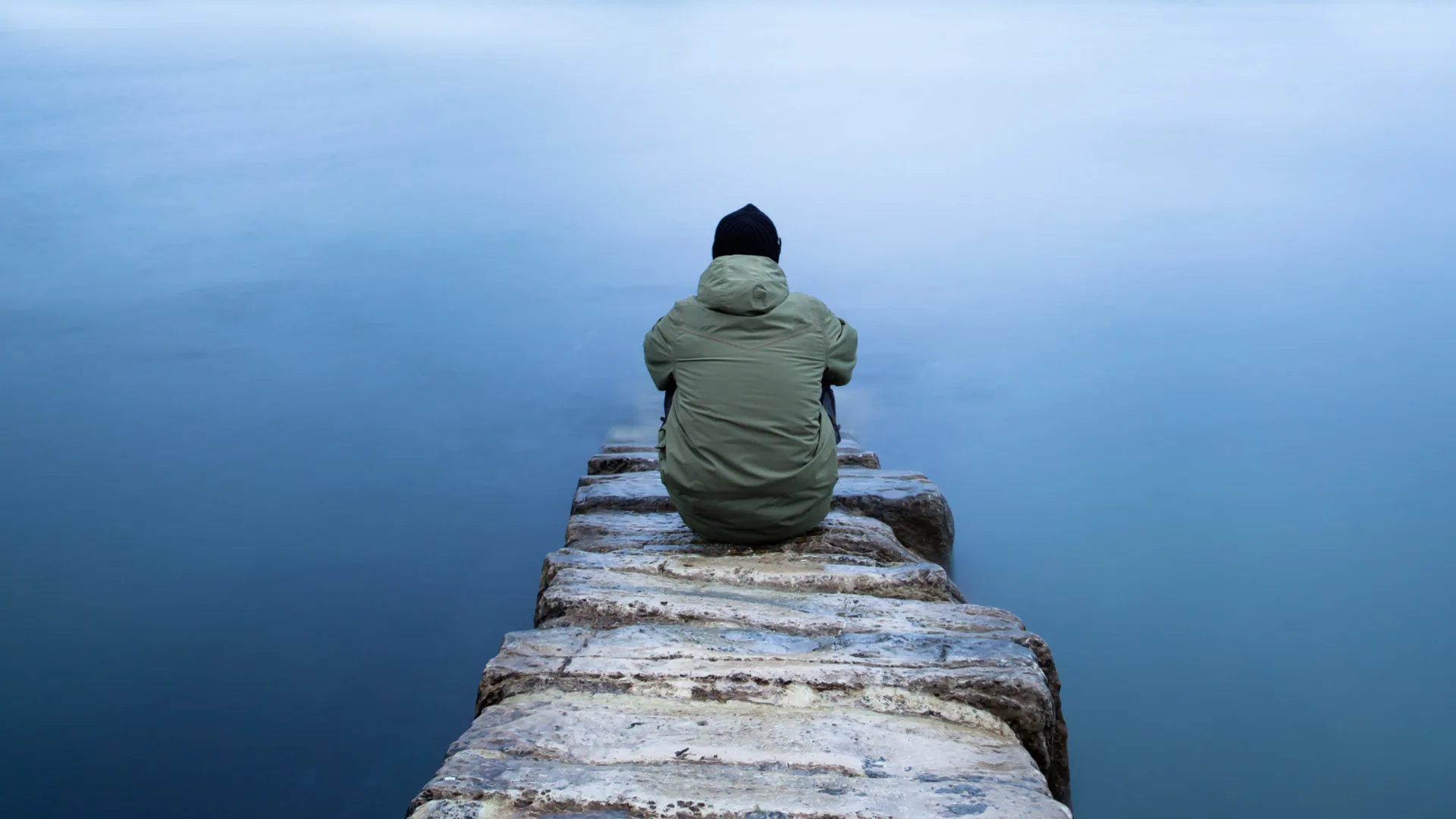
Survival mode often hides beneath strength, discipline, and a life that appears stable from the outside.
What Is Survival Mode?
Survival mode is a nervous system state where the body remains in fight, flight, or shutdown even when there is no immediate danger.
It is not simply stress or a mindset. It is a physiological pattern shaped by past experiences, especially prolonged stress, trauma, or instability.
When a man is in survival mode, his body prioritizes protection over connection, performance over presence, and control over safety.
This is why survival mode often feels like:
- Constant tension or restlessness
- Difficulty relaxing or “switching off”
- Emotional numbness or irritability
- Overthinking and hyper-awareness
- Feeling disconnected even in safe environments
Understanding this is critical because you cannot change what you misidentify. Survival mode is not who you are. It is what your nervous system learned to do.
The Invisible Grip of Survival Mode
Survival mode is not a personality trait or a choice. It’s a state, a physiological adaptation built from your history.
The nervous system is always scanning for danger, even when you’re not aware of it. When it picks up threat, real or perceived, it kicks you into a defensive state automatically, and your:
- Heart rate increases
- Breathing becomes shallow
- Digestion slows
- Muscles tighten
- Stress hormones rise
- Thoughts narrow toward problems
- Emotions flatten or escalate
This is incredibly adaptive in moments of real danger, but it’s disastrous when it becomes permanent.
The problem isn’t activation. The problem is being unable to deactivate. What men often mistake for personality is actually physiology.
Think about the things men say:
- “I can’t sit still.”
- “I don’t trust calm.”
- “I feel something bad is always coming.”
- “I can’t turn my brain off.”
- “I don’t know what I feel.”
- “I don’t need help. I’ve got it.”
These aren’t traits. These are survival adaptations: a body that never returns to baseline, a mind that stays braced long after the danger is gone, a spirit that learned early that the world is unpredictable.
And it doesn’t matter if you’re tough, accomplished, disciplined, or highly functional. Survival mode affects everyone, even the strongest men. Sometimes especially the strongest men.
This is something I see consistently in my work with men. What they believe is personality is often physiology, and once that shift is understood, change becomes possible.
Key Truth
Survival mode is not a character flaw. It is a nervous system strategy that once kept you safe.
Childhood: Where Survival Mode Begins
Survival mode has roots. Deep ones.
Some men grow up in environments where chaos is normal; where a slammed door means trouble, silence is dangerous, and unpredictability hangs in the air like humidity.
Poverty trains the nervous system to stay alert. Addiction in the home teaches a child to read danger before danger speaks. Mental illness, violence, neglect, emotional inconsistency all wire the nervous system to become hyper-vigilant.
The child becomes the lookout, the peacekeeper, the caregiver, the protector, the adult in the room, long before he should be. This was my story.
Growing up with a father who battled alcoholism meant living in a constant state of unpredictability. I learned early to monitor tone, expression, silence, all of it. I learned to anticipate danger before it unfolded. I learned to step in, step up, and step forward because the alternative was collapse.
By the time he was gone, survival was already in my bones. And by the time I was fifteen, I was working full-time to support my mother and siblings.
No child should have to be the adult. But many of us were, and the body remembers.
No child should have to be the adult. But many of us were, and the body remembers.
When the Past Doesn’t Stay in the Past
Here’s the thing about trauma, hardship, and instability: they don’t stay where they belong and they follow you into adulthood.
That childhood hyper-awareness becomes adult anxiety. That need to keep everyone safe becomes people-pleasing. That inability to trust calm becomes workaholism. That emotional numbness becomes disconnection from partners. That vigilance becomes irritability or anger. That internal shame becomes self-sabotage.
This pattern often overlaps with anxiety and depression, which many men experience without fully recognizing how deeply connected they are to their nervous system state. You can learn more about this in anxiety and depression support.
You build a life, but you build it with the nervous system of a child who went through hell. This is why so many men, men who look successful, capable, and solid, feel empty, restless, or overwhelmed inside.
This pattern is common in men who have lived through prolonged stress or trauma, and it is something I work with through men’s mental health counselling.
They built a stable home, but internally they still live in chaos. They built careers, but internally they still fear failure. They built families, but internally they fear they’re not enough.
The past whispers constantly. Sometimes loudly.
You can silence it. But you can’t outrun it. Not until you understand it.
The Choices Men Make When They’re in Survival Mode
There’s another truth that lives in the shadows but rarely gets spoken. Men avoid it out of shame, guilt, or fear of being judged.
When you’re in survival mode long enough, you make choices that don’t look like choices. Choices that other men, men who grew up safe, will never understand.
You say yes to things you shouldn’t. You get involved in things that aren’t good for you. You take risks you never would in a regulated state. And the reasons are far more complex than “bad decisions.”
1. Some choices come from protecting someone else.
Sometimes the people who should have been protecting you are the ones who put you in impossible situations. You step in because you feel you have to. You take the hit because they can’t. You carry burdens that were never yours to carry.
You cover for them. You shield them. You fix things they broke. You endure consequences they created.
That’s not criminality. That’s misplaced responsibility born from trauma.
2. Some choices come from environment.
When you grow up in chaos, chaos feels normal. When you grow up in danger, danger feels familiar. When you grow up in instability, risky opportunities feel like stability.
Men raised in survival often walk into situations others would run from. Not because they want trouble. But because their threat-assessment system is calibrated differently.
3. Some choices come from the ache inside.
This is the hardest truth of all and the one men rarely admit.
Sometimes we make bad choices because the internal pain is too heavy. Because self-loathing whispers that we don’t deserve better. Because shame blinds us. Because numbing feels easier than feeling. Because chaos feels more comfortable than silence.
Self-destruction can look like rebellion. But it usually looks like relief.
These choices are rarely black or white but instead they exist in the gray, and understanding the gray is where healing begins.
The High-Functioning Survivor: The Most Invisible Man in the Room
Many men living in survival mode don’t appear distressed.
They look like:
- Reliable employees
- Devoted partners
- Strong fathers
- Competent leaders
- Calm in crisis
- Disciplined
- Focused
- Hard-working
But internally:
- They haven’t felt relaxed in decades, often describing a form of high-functioning depression where everything looks stable on the outside, but internally there is constant pressure, tension, and exhaustion
- Their mind is constantly racing
- They sleep lightly, if at all
- They feel restless in calm environments
- They feel disconnected from loved ones
- They anticipate danger even in safety
- They blame themselves for everything
- They carry guilt that isn’t theirs
- They fear failure more than anything
These are the men most likely to break without warning. Not because they’re weak, but because they never learned to stop carrying everything alone.
High-functioning survival is both a shield and a prison.
For the Man Who Looks Fine
High-functioning does not mean healed. It often means you learned to suffer quietly while still performing.
When Survival Mode Becomes Identity
Survival mode is meant to be temporary. But when you live in it long enough, it becomes who you think you are.
You begin to believe:
Over time, this can leave men feeling lost, unsure of who they are, what they want, or where they are going in life.
- “This is just my personality.”
- “I don’t need anyone.”
- “I’m built to handle stress.”
- “I don’t deserve support.”
- “If I slow down, everything will fall apart.”
- “Calm makes me anxious.”
- “Good things don’t last.”
These beliefs aren’t truth. They’re adaptations.
Adaptations formed in environments where you learned:
- The world isn’t safe
- People aren’t consistent
- Needs make you vulnerable
- Emotions cause punishment
- Asking for help is dangerous
- Rest invites attack
- Trust equals risk
These beliefs make sense when survival is necessary, but they suffocate you when survival is no longer required.
The Biological Cost of Survival Mode
Living in survival mode long-term has measurable effects on the body:
- The nervous system misfires
You react too quickly. You shut down too easily. You feel too much or too little. - Your hormones burn out
Cortisol remains high, then crashes. Testosterone drops. Energy evaporates. - Digestion deteriorates
When the body believes it’s unsafe, it will not prioritize digestion. So men develop:- Bloating
- Acid reflux
- IBS
- Constipation
- Poor nutrient absorption
- Sleep becomes shallow and fragmented
Because the brain stays alert. - Muscles stay tense
Especially shoulders, jaw, back. - The immune system weakens
- Inflammation increases
- Emotional regulation collapses
Irritability skyrockets. Tears become rare or overwhelming. Small things feel huge.
Survival mode is not a mental health issue. It is a whole-body issue.
Why This Is Not Just Psychological
Many men try to push through survival mode by thinking differently, working harder, or forcing themselves to “get it together.”
But survival mode is not just mental. It is biological.
The nervous system, gut health, hormone balance, inflammation, and sleep all play a role in how a man feels, thinks, and functions.
This is why willpower alone often fails. Because the body itself is still operating from a place of stress and protection.
Real change happens when both the mind and the body are addressed together.
Body First
If your body cannot rest, your mind will keep searching for a threat, even in safety.
| Pattern | What It Looks Like | Healthier Direction |
|---|---|---|
| Fight | Anger, control, confrontation, irritability | Boundaries, protection, grounded clarity |
| Flight | Overworking, busyness, restlessness, constant doing | Purpose, focus, sustainable action |
| Shutdown | Numbness, disconnection, exhaustion, emotional flatness | Safety, reconnection, tolerable rest |
| High-functioning survival | Looks strong and capable while suffering internally | Support, honesty, regulation, healing |
The Emotional and Relational Cost
Men in survival mode often experience:
- Loneliness even when surrounded by people
- Difficulty trusting others
- Difficulty receiving love
- Feeling like a burden
- Feeling misunderstood
- Being seen as distant or cold
- Guilt for needing anything
- Shame for not feeling enough
Relationships suffer, not because the man doesn’t care, but because he doesn’t feel safe enough to show he cares.
Survival mode teaches shutdown, and partners often interpret that shutdown as disinterest. Misunderstanding grows from there.
This is why so many men in survival mode feel disconnected from the people they love most. It’s not that they don’t want closeness. It’s that closeness feels dangerous.
Jung, Archetypes, and the Shadow of Survival
Carl Jung believed that what we refuse to face becomes our shadow; the part of ourselves that acts without our awareness.
Survival mode is shadow. It’s unconscious fear, vigilance, self-sabotage, unconscious patterns passed from father to son, generation to generation.
Moore & Gillette wrote about the Immature Warrior: a man always ready for battle, never able to put his sword down.
Survival mode traps a man in Immature Warrior energy and causes him to be:
- Reactive
- Hyper-vigilant
- Tense
- Always preparing
- Never resting
The Mature Warrior knows when to act and when to stand down, but you can’t stand down if your body doesn’t know how.
How Survival Mode Shapes a Man’s Identity
Survival mode does not just affect how a man feels. It shapes who he becomes.
When the nervous system stays in a defensive state long enough, it begins to form patterns that look like personality but are actually adaptations.
- The Immature Warrior: reactive, tense, always prepared for conflict, unable to stand down
- The Immature King: either controlling and dominant or passive and directionless
- Emotional shutdown: difficulty accessing feelings, expressing needs, or connecting deeply
These patterns are not flaws. They are survival strategies that made sense at one point in your life.
You can explore this further in The Immature Warrior and how it evolves into grounded strength in The Mature Warrior.
Understanding this is the turning point. Because once you see the pattern, you stop blaming yourself and start changing how you respond.
The Turning Point: When a Man Finally Sees the Pattern
Every man who has lived in survival mode reaches a moment where he realizes: “I can’t keep living like this.”
For some, it’s a relationship breaking down. For some, it’s burnout. For some, it’s their body collapsing. For some, it’s a quiet moment of honesty.
For me, it was the realization that I had achieved so much: a family, a career, a practice, a sense of purpose, yet my nervous system was still operating like that kid who grew up in chaos.
My life had changed. But my body hadn’t caught up. That realization didn’t shame me. It freed me. Because once you see the pattern, you can change it.
How Men Move From Survival to Safety
There is no quick fix. There is no overnight transformation. But men can learn safety, stability, and peace.
Here is the path, the one I walked, and the one I guide men through.
Teach the body safety before teaching the mind anything
You cannot “think” your way out of survival mode. The body must learn to regulate. Safety is a body state, not an idea.
Understand your history
You cannot heal what you refuse to acknowledge. Naming the past reduces its power.
Rebuild your identity
You are not the things you did in survival. You are the man who survived them.
Develop emotional literacy
Most men in survival mode don’t lack emotion. They lack a map for navigating it.
Learn boundaries
Survival mode teaches over-responsibility. Healing teaches balance.
Build trustworthy connections
Men heal in community, not isolation.
Practice rest as a discipline
Rest is uncomfortable for the survival-conditioned man, but it is essential.
Seek support
Therapy isn’t weakness. Guidance isn’t weakness. Speaking truth isn’t weakness. It’s transformation.
Helpful practices can include:
- Breathwork
- Polyvagal exercises
- Grounding
- Slowing the exhale
- Learning stillness in tolerable doses
For a clear nervous-system framework, you can read more about Polyvagal Theory.
Shift the Target
The goal is not to become tougher. The goal is to become safer inside your own body.
The Phoenix: Why This Symbol Matters
I chose the Phoenix as the symbol of my practice for a reason. The Phoenix isn’t about perfection. It’s about fire and rebirth.
It’s about the man who has walked through hell and refuses to stay there. It’s about the man who rises not because he wasn’t burned, but because he refused to die in the ashes.
Survival mode created the fire. Healing creates the rise.
Personal Insight
For me, it was the realization that I had achieved so much: a family, a career, a practice, a sense of purpose, yet my nervous system was still operating like that kid who grew up in chaos. My life had changed. But my body hadn’t caught up. That realization didn’t shame me. It freed me. Because once you see the pattern, you can change it.
You Don’t Have to Stay in Survival Mode
If you recognize yourself in this article, it doesn’t mean you’re broken. It doesn’t mean you’re weak. It doesn’t mean you’re beyond help.
It means you’ve been living with a nervous system that has carried far too much for far too long. And it’s time to set it down.
Not alone. Not quietly. Not someday. Now.
Conclusion
Survival mode is not just stress. It is not just a bad week, a difficult season, or a personality quirk. It is a nervous system state that can shape how a man thinks, feels, reacts, relates, and carries himself through life.
Many men have spent years, even decades, appearing strong while internally living in fight, flight, or shutdown. They’ve learned to perform, provide, endure, and keep moving, but they have not learned what it feels like to truly be safe inside their own body.
That can change.
Once you begin to understand the pattern, you can stop confusing survival adaptations with identity. You can start recognizing what your body has been trying to do for you. And from there, healing becomes possible.
You have survived enough. Now it’s time to live.
Key Takeaways
- Survival mode is a nervous system state.
- It is not your personality.
- High-functioning does not mean healed.
- Healing starts in the body.
- The goal is not to become tougher. The goal is to become safer inside your own body.
Frequently Asked Questions About Survival Mode
What is survival mode?
Survival mode is a nervous system state where the body stays braced for danger through fight, flight, or shutdown, even when there is no immediate threat. It is not simply stress or a mindset. It is a physiological pattern shaped by past experiences, especially prolonged stress, trauma, or instability during childhood or early life.
What does survival mode feel like in men?
Survival mode in men often feels like constant tension, irritability, emotional numbness, overthinking, difficulty relaxing, and a persistent sense that something is always about to go wrong even when life appears stable. Many men in survival mode describe feeling unable to switch off, struggling to trust calm, and feeling disconnected from the people around them.
Can survival mode change?
Yes. Men can learn safety, stability, and peace. However, it usually takes more than insight or willpower alone. Because survival mode is a body state rather than just a mindset, healing requires working with the nervous system directly through practices like breathwork, Polyvagal-informed therapy, grounding, and trauma-informed support alongside psychological work.
Why do some men in survival mode look high-functioning?
Survival mode can hide beneath achievement, discipline, responsibility, and competence. A man may appear strong, reliable, and capable on the outside while internally experiencing constant tension, emotional numbness, exhaustion, and disconnection. High-functioning does not mean healed. It often means the man learned to suffer quietly while still performing.
Is survival mode only about mental health?
No. Survival mode is a whole-body issue. Long-term activation of the stress response can affect sleep quality, digestion, hormone balance, muscle tension, immune function, inflammation levels, and emotional regulation. This is why willpower and mindset approaches alone often produce limited results without also addressing the body.
Can childhood trauma keep you in survival mode as an adult?
Yes. Childhood trauma, instability, neglect, or chronic stress can condition the nervous system to remain hypervigilant into adulthood. Even when external life becomes stable, the body may continue to operate as if danger is still present. The nervous system does not automatically update when circumstances change. It requires intentional retraining through therapeutic work.
Why am I exhausted all the time even when I am not doing much?
Chronic exhaustion despite rest is one of the most common signs of a nervous system stuck in survival mode. When the body maintains a constant low-level stress response, it burns through energy reserves even without physical exertion. Elevated cortisol disrupts sleep architecture, meaning men often wake feeling unrefreshed even after hours of sleep. This is not laziness. It is a physiological consequence of long-term nervous system dysregulation.
What is the connection between survival mode and burnout in men?
Burnout is often what happens when a man in survival mode has been running on stress hormones and sheer determination for too long without adequate recovery. The nervous system eventually cannot sustain the activation and shifts into shutdown, producing the emotional flatness, low motivation, chronic exhaustion, and disconnection characteristic of burnout. Addressing burnout effectively requires recognizing and treating the underlying nervous system state, not just reducing workload.
How does survival mode affect motivation in men?
Survival mode significantly reduces access to motivation because the nervous system prioritizes protection over growth. When the body is in a defensive state, dopamine regulation is disrupted, meaning the reward and drive systems that fuel motivation become less responsive. A man in survival mode may know what he should do but feel unable to initiate or sustain effort. This is not a character flaw. It is a predictable consequence of chronic stress and dysregulation.
Where can men in Newfoundland or Ontario get help for survival mode and burnout?
Men in Newfoundland and Labrador and Ontario can access virtual therapy through Evolution Counselling and Wellness with Lance J. Jackson, RSW, CNP. Lance specializes in men’s mental health, trauma, nervous system regulation, and burnout recovery using a Polyvagal-informed, trauma-informed approach. A free 15-minute Clarity Call is available at evolutioncounsellingandwellness.ca.
Next Step
If this article reflects something you have been experiencing, you do not need to figure it all out at once.
Start by noticing the pattern more clearly. Then take one small step toward understanding it, addressing it, or getting support.
Related Reading
The Immature Warrior: Unmasking the Shadow of Strength
The Mature Warrior: Strength with Discipline, Purpose, and Heart
Ready to Talk It Through
If you’re a man living in survival mode and you want help moving toward stability, clarity, and strength, I’d be honored to walk with you.
You can book a clarity call or a full session at Evolution Counselling & Wellness.
You have survived enough. Now it’s time to live.
Book a Clarity CallPrefer to read the practical details first? Fees & policies
