
Support for First Responders and Public Safety Personnel Who Carry More Than Most People Ever See
First responder counselling in Newfoundland and Ontario built for the realities of operational stress – practical, confidential, and designed for the culture you work in.
Book a Free 15-Minute Clarity CallDirect billing available – Blue Cross, Canada Life, Manulife, and 20+ insurers through Telus eClaims.
View fees & insurance details.
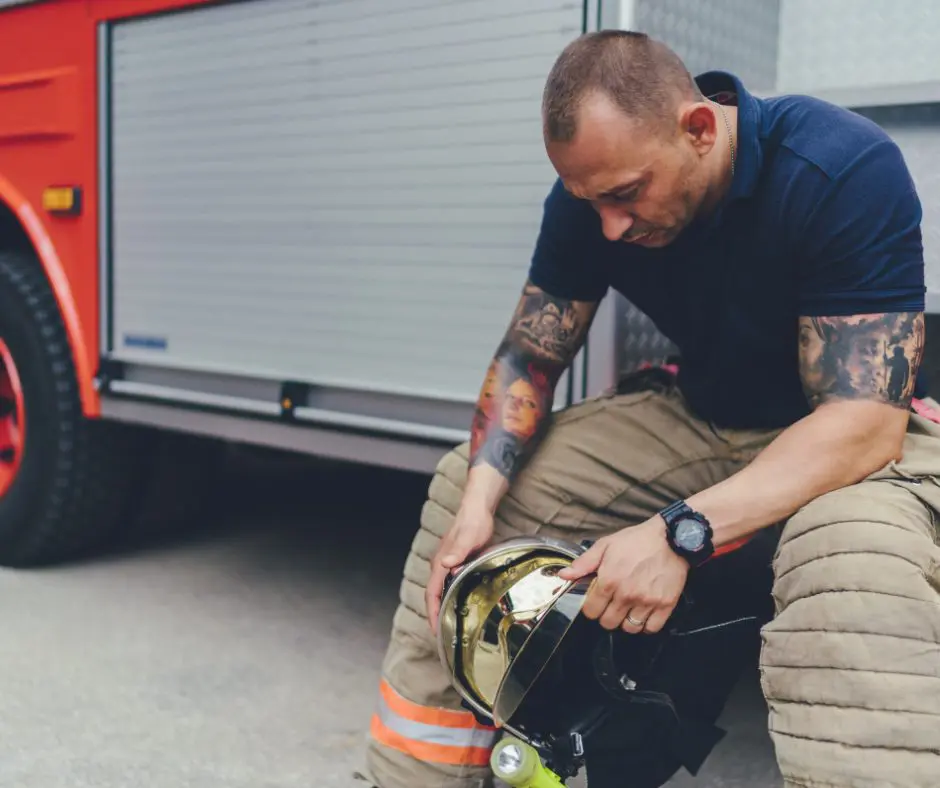
Why First Responder Counselling Needs to Be Different
First responders are repeatedly exposed to trauma, high-stakes decisions, and a culture that often expects you to handle it without visible struggle. That is not ordinary stress, and it should not be treated like it is.
Public safety work involves cumulative exposure over time rather than one single event. That can show up as hypervigilance, operational stress injuries, burnout, emotional shutdown, irritability, depression, substance use, or a persistent sense that you are always on.
This is a regulated counselling (therapy) service provided within the scope of a Registered Social Worker, available to police, firefighters, paramedics, correctional officers, dispatchers, and others in high-stress operational roles.
Operational Pressure
You are expected to stay functional while managing situations most people never face. Over time, that pressure adds up in ways that are not always easy to see.
Cumulative Exposure
The impact often comes from repeated calls, prolonged tension, and years of carrying things silently rather than from one isolated moment.
Culture and Silence
Many PSPs hesitate to reach out because of concerns about confidentiality or job impact. That hesitation is common and understandable – and this space is separate from your workplace.
Common Challenges Addressed in First Responder Counselling
Support is available when the pressure of the job is starting to affect your mental health, relationships, or ability to recover outside work.
PTSD and Operational Stress Injuries
Processing exposure, reducing triggers, and regaining a greater sense of internal control.
Anxiety and Hypervigilance
Addressing constant alertness, tension, sleep disruption, and difficulty shifting out of work mode.
Depression and Emotional Numbness
Working with the heaviness, detachment, or loss of motivation that can build over time.
Burnout and Exhaustion
Supporting recovery when long-term overload starts affecting patience, energy, or your sense of purpose.
Anger and Irritability
Understanding what is underneath the intensity and building better emotional regulation under pressure.
Substance Use as Coping
Addressing patterns that may have developed as a way to come down, disconnect, or get through the next shift.
Sleep and Recovery Problems
Looking at the routines, stress load, and nervous system patterns that make rest harder than it should be.
Relationship Strain
Supporting the impact this work can have at home when stress, distance, or emotional shutdown starts spilling over.
How the Work Typically Starts
You do not have to begin by going into every call or reliving everything you have seen. In many cases, we start by helping you get more stable first.
Stabilize the System
We focus on stress regulation, sleep, emotional control, and reducing the constant always-on state that keeps your body keyed up.
Understand the Pattern
You start seeing how operational stress, trauma exposure, habits, and nervous system responses are affecting how you think, feel, and function.
Work on the Core Issues
When appropriate, we begin processing trauma, reducing triggers, and changing the responses that keep you stuck in survival mode.
Rebuild Control and Resilience
The goal is practical change: functioning better on the job, recovering more effectively off the job, and feeling more like yourself again.
Therapeutic Approaches Used in This Work
We use evidence-based approaches well-suited to trauma exposure, chronic operational stress, emotional regulation, and rebuilding day-to-day functioning.
Cognitive Behavioral Therapy
CBT helps identify the thought patterns and behavioural loops that reinforce anxiety, avoidance, stress escalation, and low mood.
Trauma-Focused CBT
This approach helps process traumatic exposure more directly when you are ready, with a structure designed to reduce PTSD symptoms and increase stability.
Dialectical Behavior Therapy
DBT supports distress tolerance, emotional regulation, and practical skills for managing intensity without defaulting to shutdown or escalation.
Polyvagal-Informed Work
Understanding nervous system responses helps make sense of hypervigilance, numbness, irritability, and why coming down after work can be so difficult.
Motivational Interviewing
This helps when part of you knows something needs to change but another part is reluctant, skeptical, or used to handling things alone.
Solution-Focused Therapy
This keeps the work practical by building from strengths, clarifying priorities, and developing usable strategies for life on and off shift.
Grounding and Mindfulness
Grounding and mindfulness support present-moment awareness and can help regulate the nervous system reactivity that makes it hard to switch off after a shift.
Grounding and Mindfulness
Natural Nutrition
Where appropriate, sleep, energy, and stress physiology may be considered within counselling as part of a broader perspective. Separate wellness services are available for more structured support.
Why This Work May Feel Different
This May Be a Good Fit If You:
- Work in a high-stress public safety role and need support that understands that environment
- Want a practical, structured, no-nonsense approach
- Are dealing with trauma exposure, burnout, sleep problems, irritability, or emotional shutdown
- Need counselling that respects confidentiality and the culture you work in
Relevant Context
In addition to clinical training, this work is informed by personal experience as a volunteer firefighter. That does not replace the therapeutic process, but it does change the level of cultural understanding brought into the room.
How This Service Differs From Wellness Services
This page focuses on counselling (therapy) for first responders and public safety personnel.
Counselling addresses trauma, stress exposure, emotional regulation, and psychological functioning. Counselling services are available only in Newfoundland and Labrador and Ontario.
Wellness and nutrition services focus on physical systems such as energy, digestion, sleep, and stress physiology, and are available across Canada separately.
Frequently Asked Questions
Is this therapy or coaching?
This is a regulated counselling (therapy) service provided within the scope of a Registered Social Worker.
Do I need to live in Newfoundland and Labrador or Ontario?
Yes. Counselling services are available only to residents of Newfoundland and Labrador and Ontario. Wellness services are available across Canada.
Do you work specifically with first responders and public safety personnel?
Yes. I provide specialized counselling for first responders and public safety personnel, including police, firefighters, paramedics, correctional officers, dispatchers, and others in high-stress roles. This work is tailored to the realities of life in uniform, not a generic approach.
Why is therapy for first responders different?
First responders face repeated exposure to trauma, high-pressure decision-making, and a culture that often expects you to handle it without support. This is not typical stress. It requires a different kind of understanding and approach – one that respects the operational environment you work in.
What are common mental health challenges for first responders?
Common challenges include:
- PTSD and operational stress injuries
- Anxiety and chronic hypervigilance
- Depression and emotional numbness
- Burnout and exhaustion
- Anger and irritability
- Substance use as a coping strategy
- Relationship strain and emotional shutdown
These are often the result of cumulative exposure over time, not just one event.
What if I don’t want to talk about the calls I’ve been on?
You do not have to. We work at your pace. In many cases, we start with stress regulation, sleep improvement, and emotional control. You are not forced to relive anything before you are ready.
Is therapy confidential for first responders?
Yes. Confidentiality is a core part of the work. What you share stays private, with only standard legal exceptions related to safety. This space is entirely separate from your workplace.
Do you understand what it’s like to be a first responder?
Yes. In addition to clinical training, I have personal experience as a volunteer firefighter. I understand the culture, the expectations, and the pressure to stay composed no matter what. That changes the level of connection and understanding I can bring to this work.
How does therapy help with PTSD or operational stress injuries?
Therapy helps you process what you have been exposed to, reduce the intensity of triggers and reactions, improve emotional regulation, and regain a sense of control and stability. We use structured, evidence-based approaches including CBT, trauma-focused work, and nervous system regulation strategies.
What if I’ve been dealing with this for years?
That is more common than most people admit. Many first responders carry this for years before reaching out. The length of time does not determine whether change is possible. What matters is what you are ready to address now.
What if I don’t think therapy is for me?
That is a common starting point. Many first responders are used to handling things on their own. This is not about changing who you are – it is about giving you better tools to manage what you are carrying. You do not have to be fully convinced to start. You just have to be open to a conversation.
How do I get started?
Start with a free 15-minute clarity call. No pressure – just a conversation to ask questions, talk through what is going on, and see if this feels like a good fit. From there, you decide the next step.
Get Started When You’re Ready
If operational stress, trauma exposure, or chronic burnout has been taking too much from you, this is a place to start addressing it directly. A free clarity call is the simplest first step.
Book a Free 15-Minute Clarity CallDirect billing available – Blue Cross, Canada Life, Manulife, and 20+ insurers through Telus eClaims.
View fees & insurance details.
Page last reviewed: June 2026
